
- Common name - Sardine, European pilchard
- Scientific name - Sardina pilchardus
- Visit Fishonline for the full range of options available for this species.
- Consumer Information
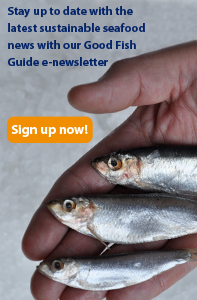
- Sardines and pilchards are the same fish, just given a different name depending on their size, young pilchards are often referred to as sardines and are named after the Mediterranean island of Sardinia where they once lived in abundance. They are an oily fish with bright silver skins, related to herrings. Sardines have a strong flavour and are rich in omega-3 fatty acids Usually cooked whole (gutted), great on the barbecue or oven-baked. Commonly bought tinned, either in oil or a sauce, and good on toast! One of the best choices to make is pilchard - sold as Cornish sardines - caught in coastal waters off Cornwall in the South West of England using traditional drift or ring nets.
- Summary
- Sardines or pilchards (sardine being below 15cm and pilchard above) are caught in the northeast Atlantic, central eastern Atlantic and the Mediterranean sea. 21 species are canned as sardines, but the European pilchard is the only true sardine. Sardines are commonly caught with purse seine nets and pelagic trawls, which are very selective when used to catch shoaling species and have no impact on the seabed. However, cetacean bycatch can occur. Sardine is a forage species providing prey to many larger fish and marine mammals, so large scale removal can have knock-on effects. Stock status varies and can change rapidly in reaction to variation in climatic conditions. In terms of size, traditionally sardines have been below 15cm in length, the size at which the species mature, and pilchards above - so in terms of size pilchard is the most sustainable option, but a sardine over 15cm will suffice! Locally caught Cornish sardines are the best choice, caught with ring nets and drift nets, with sardines from Morocco and Mauritania also a good choice. MSC certified fisheries occur in Cornwall, Portugal and southern Brittany - all of these are great sustainable choices.
- Alternatives
- (Based on method of production, fish type, and consumer rating: only fish rated 3 and below are included.)
- Visit Fishonline, the website for the seafood industry, for more detailed information about this species.


 A message from our sponsor: You can support marine conservation efforts in Britain by playing the People's Postcode Lottery. We support our charity partners' commitment to protect the marine environment, highlight the fragile nature of our oceans and campaign for better fishing practices. www.postcodelottery.com
Marine Conservation Society
Company Limited by Guarantee No. 2550966
Registered Charity England and Wales No. 1004005 |
Scotland No. SC037480
Registered Office: Unit 3, Wolf Business Park, Alton Road,
Ross on Wye HR9 5NB, Scottish office: 3 Coates Place,
Edinburgh EH3 7AA. Copyright MCS 2012 All rights reserved.
Company Limited by Guarantee No. 2550966
Registered Charity England and Wales No. 1004005 |
Scotland No. SC037480
Registered Office: Unit 3, Wolf Business Park, Alton Road,
Ross on Wye HR9 5NB, Scottish office: 3 Coates Place,
Edinburgh EH3 7AA. Copyright MCS 2012 All rights reserved.